Applying a fresh batch of zinc sulfate to your roof on a semi-annual basis inhibits moss growth. Here’s how:
1. Rain Activates the Zinc
When rainwater hits zinc (like zinc strips installed near the ridge of a roof), tiny amounts of zinc ions are released.
2. Zinc Ions Wash Down the Roof
That rainwater carries the zinc ions down across the shingles.
3. Zinc Disrupts Moss Growth
Moss is very sensitive to certain metals. Zinc interferes with:
- Cell membrane function
- Enzyme activity
- Nutrient absorption
- Photosynthesis
This prevents the moss from growing and eventually causes it to die off.
Why It Works Well for Roofs
- It’s slow-release and long-lasting
- It activates naturally with rainfall
- It creates a protective zone below the strip
- It discourages regrowth over time
Important Detail
Zinc is preventative and suppressive, not an instant moss remover.
It:
- Slows growth
- Prevents new moss from establishing
- Helps kill small patches over time
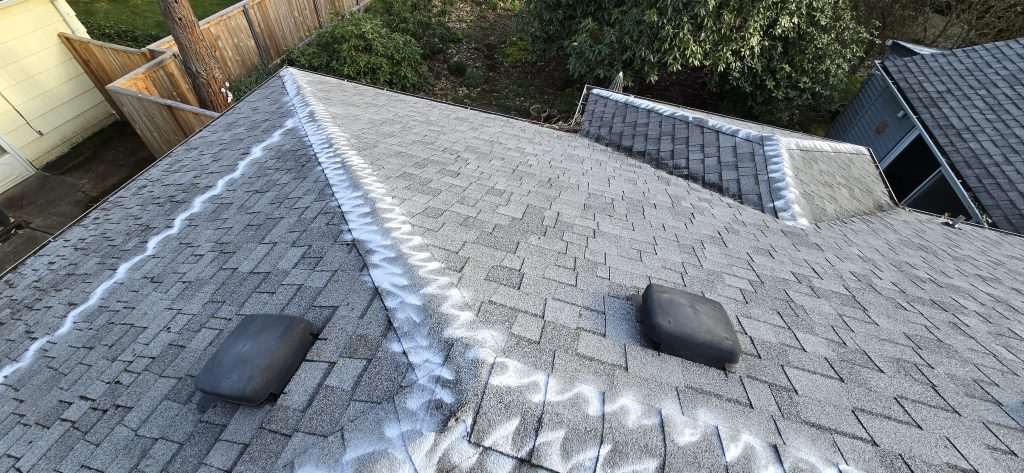
But it won’t immediately remove thick, mature moss — that still needs manual removal (which fits perfectly with your brush-removal approach).
Zinc & Chemical Treatment FAQs
Q: How does zinc kill moss?
A: Zinc works by releasing tiny amounts of zinc ions when water (like rain) runs over your roof. These ions disrupt moss growth by interfering with its cell processes, enzyme activity, and nutrient absorption. Over time, this prevents new moss from establishing and slowly kills small existing patches.
Unlike pressure washing or harsh chemicals, zinc is slow-release and roof-safe, providing long-term prevention without damaging your shingles.
Q: Is zinc sulfate powder safe for my plants and landscaping?
A: Zinc sulfate is generally safe when applied in the correct, controlled amounts. Most plants tolerate small amounts because zinc is a micronutrient they naturally need.
That said, concentrated runoff can harm sensitive or young plants by affecting root growth and nutrient uptake. Our trained team ensures proper application, functioning gutters, and correct runoff management to protect your landscaping.
Precautions we take include:
- Directing runoff away from delicate landscaping
- Periodically flushing concentrated areas with fresh water if needed
- Following the recommended zinc dosage — more is not better
Q: Which plants are sensitive to zinc?
A: While most established trees, shrubs, and hardy perennials tolerate zinc well, certain plants are sensitive to concentrated zinc runoff.
| Safe / Hardy Plants | Sensitive / Avoid Direct Runoff |
|---|---|
| Established trees (oak, maple, pine) | Azaleas & rhododendrons |
| Shrubs (boxwood, hydrangea, holly) | Blueberries & other acid-loving plants |
| Perennials (daylilies, mature hostas) | Ferns & young hostas |
| Lawns (mature grass) | Vegetable seedlings (spinach, lettuce, leafy greens) |
| Flowering perennials (peonies, coneflowers) | Petunias, impatiens, other tender annuals |
Tips for protecting sensitive plants:
- Ensure gutters and downspouts direct runoff away from delicate areas
- Avoid applying just before heavy rain
- Lightly rinse soil in concentrated areas if necessary
- Stick to the recommended dosage
💡 Bottom line: Most established plants tolerate zinc well. Only young, tender, or acid-loving plants need extra care.
Q: Can zinc stain my shingles, gutters, or concrete?
A: Zinc sulfate is water-soluble and typically does not stain shingles when applied properly. It can leave very slight streaks on concrete or gutters if runoff pools in one spot, but this can usually be rinsed away with water. Our application method is designed to minimize any surface contact outside the roof.
Q: How long does zinc treatment last?
A: Zinc is a slow-release treatment. On average, it can prevent moss for 1–3 years, depending on roof conditions, rainfall, and moss growth in your area. For long-term protection, we recommend monitoring your roof annually and applying maintenance treatment as needed.
Q: Will zinc runoff affect my pets or children?
A: Zinc sulfate in normal application amounts is low-risk for pets and people. Our application process keeps runoff controlled, and once the powder has dissolved and washed off the roof, exposure is minimal. Avoid allowing pets or children to play in areas of concentrated runoff immediately after treatment.